
The Ultimate Winter Citrus and Pomegranate Harvest Salad
A masterpiece of seasonal cooking balances contrasting textures, colors, and flavors on a single plate. While salads are often associated with hot summer days, winter and spring harvest fields produce some of the most vibrant, structurally resilient greens and incredibly sweet, acidic fruits available to home cooks.
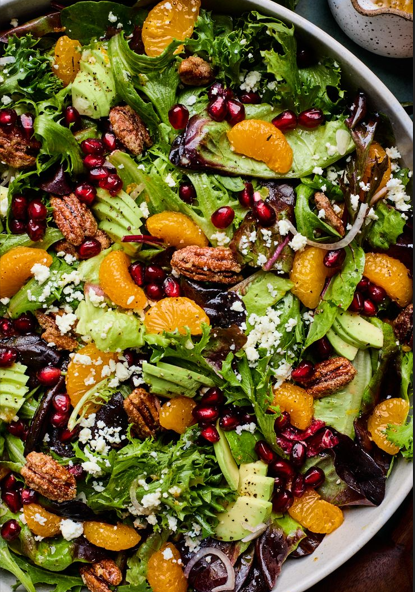
As beautifully demonstrated in the user-provided image, this Winter Citrus and Pomegranate Harvest Salad combines crisp, frilly winter salad greens with juicy mandarin orange segments, ruby-red pomegranate arils, creamy sliced avocado, and salty crumbled feta cheese. Tossed with sweet candied pecans and a bright vinaigrette, this dish is an absolute showstopper for holiday tables, healthy weekday meal preps, or high-traffic Pinterest and food blog content.
The Art of Balancing Salad Architecture
The stunning presentation in Screenshot 2026-06-07 045622.jpg works because it follows the rules of elite salad composition. When combining raw ingredients, you must satisfy five core culinary categories:
1. The Structural Base (Frisée and Spring Mix)
Instead of flat, heavy lettuces, this salad utilizes a base of lofty, frilly greens like frisée, chicory, and tender red-leaf spring mix. The open, curly structures of these leaves create physical volume on the plate and catch individual drops of dressing without collapsing or becoming soggy.
2. High-Definition Acids (Mandarin Oranges and Pomegranate)
- Mandarin Segments: Provide a bright, clean, honey-like sweetness bursting with liquid juice.
- Pomegranate Arils: Act like tiny, crunchy jewels that release a tart, astringent punch when bitten, cutting through the heavy elements of the salad.
3. The Rich Emollients (Avocado and Feta)
To balance out the intense acidity of the citrus, rich fats are required. Creamy, buttery slices of ripe avocado provide a smooth, velvety mouthfeel, while dry crumbled feta cheese adds a sharp, salty, umami kick.
4. The Candied Crunch (Pecans)
A truly satisfying salad needs a loud textural element. Whole or chopped pecans glazed in a light shell of caramelized sugar bring a earthy, smoky sweetness and a solid, satisfying crunch.
Technical Cooking Guide: The Master Recipe
This comprehensive, WordPress-ready guide covers everything needed to build a pristine, high-conversion recipe post.
Ingredients
For the Salad Base:
- 200g premium spring mix with frisée and radicchio leaves
- 3 mandarin oranges (or clementines), peeled and segmented
- 1 cup fresh pomegranate arils (seeds)
- 1 large ripe Hass avocado, pitted and sliced into fans
- 100g high-quality block feta cheese, coarsely crumbled
- 0.75 cup candied pecans, left whole
For the Honey-Champagne Vinaigrette:
- 4 tablespoons extra virgin olive oil
- 2 tablespoons champagne vinegar (or white wine vinegar)
- 1 tablespoon fresh orange juice
- 1 tablespoon raw honey (or pure maple syrup)
- 1 teaspoon Dijon mustard (to emulsify)
- Sea salt and freshly cracked black pepper, to taste
Step-by-Step Culinary Instructions
Step 1: Whisk the Emulsified Vinaigrette
In a small glass bowl or mason jar, combine the champagne vinegar, fresh orange juice, raw honey, Dijon mustard, sea salt, and black pepper. While whisking vigorously, slowly stream in the extra virgin olive oil until the mixture thickens and completely emulsifies into a cohesive, golden dressing.
Step 2: Wash and Dry the Greens
Wash your spring mix and frisée thoroughly in ice-cold water. Spinning the greens in a salad spinner until they are bone-dry is a critical step. If the leaves are carrying surface water, the oil-based dressing will slip right off, pooling at the bottom of your bowl and leaving your salad tasting bland.
Step 3: Prep the Produce
- Mandarins: Carefully remove as much of the bitter white pith from the orange segments as possible.
- Pomegranate: Tap the back of a halved pomegranate with a wooden spoon over a deep bowl to easily dislodge the seeds without spraying juice on your clothes.
- Avocado: Slice the avocado just before assembling to prevent the flesh from oxidizing and turning brown in ambient air.
Step 4: The First Toss
In an extra-large mixing bowl, place the dry greens. Drizzle approximately half of the prepared honey-champagne vinaigrette over the top. Using clean hands or wooden salad servers, gently lift and toss the leaves from the bottom up until every leaf shimmers with a microscopic coat of dressing.
Step 5: Construct the Layers
Transfer the dressed greens into a wide, shallow serving platter rather than a deep bowl. This presentation strategy, beautifully executed in Screenshot 2026-06-07 045622.jpg, prevents all the heavy toppings from sinking to the bottom out of sight.
Tuck the sliced avocado fans evenly throughout the greens. Scatter the mandarin orange segments, ruby pomegranate arils, and candied pecans across the entire surface.
Step 6: Garnish and Serve
Finely crumble the block feta cheese directly over the top of the platter, creating a beautiful snow-like contrast against the dark green leaves. Drizzle the remaining vinaigrette over the newly added fruits and cheeses. Finish with a final dusting of freshly cracked black pepper. Serve immediately.
Pro Tips for Advanced Salad Prep
To ensure your harvest salad looks flawless every single time, integrate these expert kitchen techniques:
- Preventing Avocado Browning: If you must prep this salad a few hours ahead of time, toss your fresh avocado slices in a tablespoon of lime or lemon juice before adding them to the platter. The ascorbic acid completely stalls the enzyme reaction responsible for browning.
- The Power of Cold Plunging: If your store-bought greens look slightly wilted or tired, submerge them in a bowl filled with ice water for 5 minutes. The cellular walls of the leaves will rapidly drink up moisture via osmosis, making them incredibly crisp and crunchy again.
- Crumble Your Own Feta: Avoid buying pre-crumbled feta tubs. Pre-crumbled cheese is coated in non-caking starches that dry out the texture. Buying feta preserved in brine and crumbling it yourself right over the salad yields a vastly superior, moist, and creamy result.
Flavor Extensions and Substitutions
This versatile base can be tailored to match different dietary profiles and ingredient availabilities:
| Core Ingredient | Elite Substitution | Flavor Profile Shift |
| Mandarin Oranges | Sliced Fresh Figs or Blood Oranges | Deepens the aesthetic with dark crimson colors; adds a jammy, complex sweetness. |
| Feta Cheese | Creamy Goat Cheese (Chèvre) or Gorgonzola | Shifts the profile from sharp and salty to earthy, rich, and intensely savory. |
| Candied Pecans | Roasted Sliced Almonds or Pepitas | Lowers the overall sugar content; provides a cleaner, lighter, nuttier crunch. |
| Champagne Vinegar | Aged Balsamic Vinegar | Creates a sweeter, heavier, dark syrup coating with molasses undertones. |
By respecting structural balance, utilizing a shallow platter, and celebrating high-contrast colors, you can effortlessly replicate the world-class, vibrant results captured i on your own dining table.