
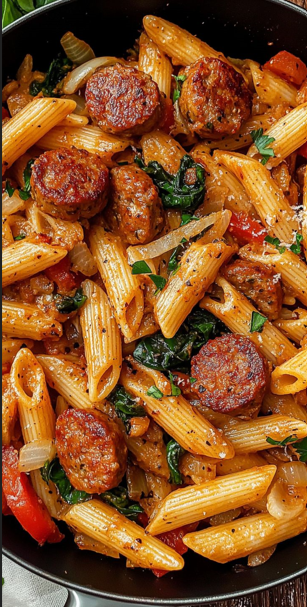
The Ultimate One-Pan Spicy Sausage and Penne Pasta Skillet
One-pan pasta dishes are a triumph of modern home cooking, offering deep, slow-simmered flavors with minimal cleanup. By cooking the pasta directly in the same vessel used to sear the meat and build the sauce, the natural starches from the pasta are released straight into the liquid, binding the ingredients together into a naturally glossy, restaurant-quality emulsion.
As beautifully showcased in the user-provided , this One-Pan Spicy Sausage and Penne Skillet combines perfectly browned, thick-cut rounds of savory sausage with tender penne pasta. It is tossed in a rich, sun-kissed tomato and garlic reduction, interwoven with wilted baby spinach, caramelized onions, and sweet bell peppers, and finished with a delicate dusting of freshly grated Parmesan cheese.
Anatomy of an Elite Pasta Skillet
Achieving the rich depth and tight sauce binding displayed in image_86215d.jpg relies on a few key culinary mechanics:
1. The Power of Fond (Sausage Searing)
The foundation of this dish’s flavor profile starts with rendering the sausage. Searing thick-cut rounds at a high temperature creates a deeply caramelized exterior crust while leaving behind a layer of browned bits stuck to the bottom of the pan—known in French culinary terms as fond. This fond is packed with concentrated, savory energy that infuses the entire sauce once deglazed.
2. Why Penne Rigate?
The word rigate means ridged. Using a ridged tubular pasta like penne is essential here because the external texture acts like velcro for the rustic tomato sauce, while the hollow center traps pieces of minced garlic, onion, and melted cheese, ensuring a balanced distribution of components in every forkful.
3. The Role of Fresh Greens and Aromatics
- Sweet Onions and Peppers: Sautéed directly in the rendered sausage fat, they soften, sweeten, and balance the fiery spice of the meat.
- Baby Spinach: Folded in during the final sixty seconds of cooking, it wilts instantly from the ambient steam, adding a vibrant pop of color and earthy freshness without turning watery.
Technical Cooking Guide: The Master Recipe
This robust, WordPress-optimized guide is designed for high-conversion food blogs and seamless execution.
Ingredients
For the Skillet Base:
- 400g high-quality spicy Italian sausage links (or smoked sausage), sliced into 1/2-inch thick rounds
- 300g dried penne rigate pasta
- 1 medium yellow onion, sliced into thin strips
- 1 red bell pepper, sliced into thin strips
- 3 cloves garlic, finely minced
- 2 tablespoons extra virgin olive oil (if needed)
For the Simmering Sauce & Finishes:
- 1 can (400g) crushed San Marzano tomatoes
- 2.5 cups low-sodium chicken stock (or vegetable stock)
- 2 cups packed fresh baby spinach leaves
- 0.5 cup freshly grated Parmesan cheese (Parmigiano-Reggiano)
- Sea salt and freshly cracked black pepper, to taste
- A pinch of red pepper flakes (optional, for extra heat)
- Fresh flat-leaf parsley, finely chopped for garnish
Step-by-Step Culinary Instructions
Step 1: Sear the Sausage Rounds
Place a large, heavy-bottomed skillet or cast-iron pan over medium-high heat. Add a tiny drizzle of olive oil if your sausage is exceptionally lean. Once hot, lay the sliced sausage rounds in a single layer. Sear without moving for 3 to 4 minutes until a deep brown, crispy crust forms on the bottom, then flip and sear the other side for an additional 2 to 3 minutes. Remove the sausage with a slotted spoon and set aside, leaving the rendered fat in the pan.
Step 2: Sauté the Aromatics
Turn the heat down to medium. Drop the sliced onions and red bell peppers directly into the residual sausage fat. Cook for 4 to 5 minutes, stirring occasionally, until the onions become translucent and start to pick up golden edges from the pan. Add the minced garlic and optional red pepper flakes, cooking for exactly 60 seconds until highly aromatic, taking care not to let the garlic burn.
Step 3: Deglaze the Pan
Pour in the crushed tomatoes and chicken stock. Use a wooden spoon to firmly scrape the bottom of the skillet, lifting up all the caramelized browned bits (the fond) left behind by the sausage. This instantly incorporates deep, complex flavors straight into the liquid base.
Step 4: Add the Pasta
Stir the dry penne rigate directly into the liquid. Ensure the pasta is spread out evenly and mostly submerged. Bring the liquid up to a rolling boil, then immediately reduce the heat to medium-low, cover the skillet with a tight-fitting lid, and let it simmer for 10 to 12 minutes. Stir once or twice halfway through to prevent any pasta tubes from sticking to the bottom of the pan.
Step 5: Incorporate and Reduce
Remove the lid. The pasta should be perfectly al dente, and the liquid should have reduced into a thick, velvety tomato glaze coating the noodles. Slide the cooked sausage rounds back into the pan, along with any juices that accumulated on the plate. Stir well to combine and warm the meat back through.
Step 6: Wilt the Spinach and Melt the Cheese
Turn off the heat entirely. Add the fresh baby spinach leaves and half of the grated Parmesan cheese to the skillet. Gently fold the greens into the hot pasta; the residual heat will perfectly wilt the spinach within one minute while preserving its bright green look, exactly as seen in image_86215d.jpg.
Step 7: Garnish and Serve
Season with a final turn of cracked black pepper and a touch of sea salt if desired. Top the skillet with the remaining grated Parmesan cheese and a scattering of fresh chopped parsley. Serve directly from the skillet to keep the dish hot and rustic.
Troubleshooting Common One-Pan Pasta Pitfalls
The Liquid is Gone but the Pasta is Still Hard
- The Cause: Your stove heat was set too high, causing the liquid to evaporate too rapidly before the pasta could fully absorb it, or the pan lid wasn’t sealed tightly.
- The Fix: Pour in an extra 1/4 cup of warm stock or water, stir thoroughly, pop the lid back on, and let it steam over low heat for an extra 2 to 3 minutes until tender.
The Sauce is Too Soupy or Thin
- The Cause: Too much liquid was added, or the skillet remained covered for too long, preventing natural reduction.
- The Fix: Remove the lid completely, turn the heat up to medium-high, and let the sauce bubble rapidly for 2 to 3 minutes while stirring gently. The starch from the penne will rapidly bind and thicken the sauce as it reduces.
Flavor Modifications and Ingredient Swaps
This versatile skillet adapts effortlessly to different dietary preferences and regional flavors:
| Modification | Ingredient Replacements | Culinary Result |
| Lighter / Leaner | Swap pork sausage for spicy chicken or turkey sausage. | Reduces overall fat content while maintaining a punchy, savory profile. |
| Creamy Tuscan Style | Pour in 1/4 cup of heavy cream along with the spinach at the end. | Transforms the bright tomato base into a rich, velvety pink rosa sauce. |
| Gluten-Free Option | Use high-quality brown rice or chickpea penne. | Keeps the dish gluten-free; reduce simmering time by 2 minutes to prevent over-softening. |
| Vegetarian Delight | Swap sausage for sliced plant-based chorizo and sliced mushrooms. | Delivers a deep, earthy, and umami-rich vegetarian experience. |
By mastering the simple art of browning meat, deglazing the fond, and letting the pasta cook directly in the sauce, you can easily replicate the stunning, mouth-watering resu whenever you need a fast, elite weeknight meal.