
The Ultimate Guide to Dubai Pistachio Chocolate: History, Recipe, and the Viral Phenomenon
The world of confectionery is no stranger to sudden, meteoric trends, but few sweet treats have captured the global imagination quite like the Dubai Pistachio Chocolate Bar. What started as a hyper-local, artisanal creation in the United Arab Emirates quickly transformed into an international digital sensation.
From TikTok feeds and Instagram Reels to high-end boutique chocolatiers in New York, London, and Tokyo, everyone is talking about, craving, or attempting to replicate this specific combination of textures and flavors.
But what exactly is this viral chocolate bar? Why did it capture the collective obsession of millions of food lovers worldwide? And most importantly, how can you recreate this decadent masterpiece in your own kitchen?
This comprehensive, deep-dive guide explores everything you need to know about the Dubai Pistachio Chocolate Bar. We will look into its origins, break down the complex interplay of its textures, provide an exhaustive master recipe, analyze its nutritional footprint, and offer professional tips for scaling this treat for commercial sale.
1. The Anatomy of a Viral Sensation
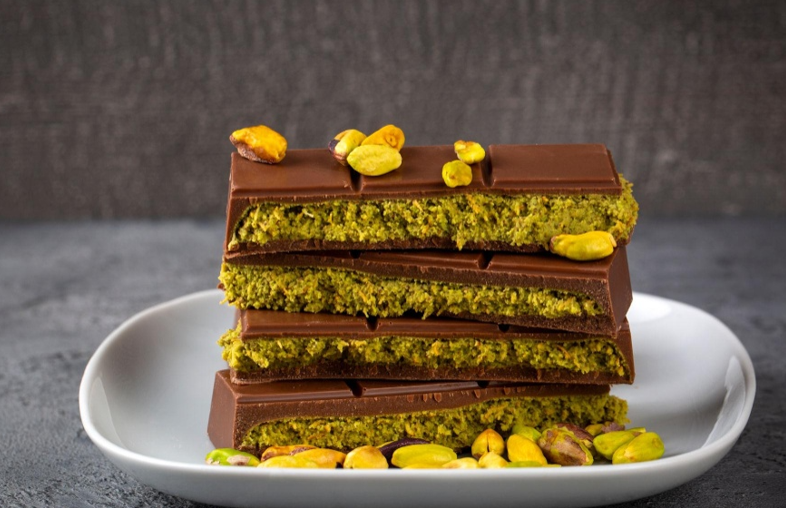
To understand why this chocolate bar took the world by storm, one must look closely at its structural anatomy. It is not merely a flavored chocolate bar; it is a multi-sensory experience engineered around contrasting textures and deeply comforting flavor profiles.
+---------------------------------------------------------+
|                Premium Milk or Dark Chocolate Shell     |
+---------------------------------------------------------+
|  Toasted, Crispy Kataifi Pastry Threads (Buttery Crunch) |
|  & Luxurious, Creamy Roasted Pistachio Paste/Butter      |
+---------------------------------------------------------+
|                Premium Milk or Dark Chocolate Shell     |
+---------------------------------------------------------+
The Three Structural Pillars
The bar relies on three distinct elements working in perfect harmony:
- The Snap (The Outer Shell): A perfectly tempered chocolate shell—traditionally high-quality milk chocolate, though dark and white chocolate variations exist—that provides an audible, clean “snap” when broken or bitten into.
- The Crunch (The Kataifi Filling): Inside the bar lies a generous filling of kataifi (also known as kadayif). These are fine, shredded phyllo dough threads traditionally used in Middle Eastern desserts like kunafa. When finely chopped and toasted deeply in high-quality butter, they retain an incredibly airy, shattered crunch that persists even when submerged in fat-rich spreads.
- The Cream (The Pistachio Paste): The toasted kataifi is folded into a rich, velvety pistachio cream or paste. This paste is intensely nutty, mildly sweet, and deeply savory, offering a luxurious contrast to the sugary snap of the outer chocolate.
The Psychology of Food Trends
Why did this specific combination go viral? The answer lies in auditory and visual food psychology. The rise of ASMR (Autonomous Sensory Meridian Response) content on video platforms meant that food creators were looking for items that made incredible sounds.
When a content creator breaks open a Dubai pistachio chocolate bar close to a microphone, the sound of the thick chocolate cracking open, followed by the deep, resonant “scrunch” of the buttery kataifi filling, creates an immediate sensory reaction in the viewer. Combined with the visual appeal of a vibrant green, oozing center bursting out from a glossy chocolate exterior, the bar became the ultimate clickbait that actually delivered on flavor.
2. History and Origins: From Fix Dessert Chocolatier to Global Fame
While pistachio and chocolate have been paired together for centuries across the Mediterranean and the Middle East, the specific format of the viral “stuffed” kataifi bar has a distinct, modern birthplace: Dubai, United Arab Emirates.
The Architect: Sarah Hamouda
The original creator of this viral sensation is Sarah Hamouda, a Dubai-based entrepreneur who founded Fix Dessert Chocolatier in 2021. Hamouda, who was pregnant at the time, experienced intense, specific cravings for a dessert that went beyond standard chocolate bars. She wanted something that combined her love for traditional Middle Eastern desserts with high-end British and European chocolate styles.
Alongside her husband, she began experimenting in her kitchen, crafting thick, chunky chocolate bars stuffed with non-traditional fillings. The breakout star of her lineup was named “Can’t Get Knafeh Of It”, a clever play on words referencing the classic Middle Eastern dessert Kunafa (Knafeh).
The Video That Changed Everything
For the first couple of years, Fix Dessert Chocolatier operated as a small, local delivery business in Dubai, making limited daily batches. The turning point came in late December 2023 and early 2024, when food influencer Maria Vehera (@mariavehera257 on TikTok) posted an ASMR review of the “Can’t Get Knafeh Of It” bar while eating it in her car.
The video amassed tens of millions of views within days. Viewers were mesmerized by the thick, chunky aesthetic of the bar, the vibrant green color of the pistachio filling, and the loud, addictive crunch of the kataifi pastry. Almost overnight, international demand skyrocketed.
The Scarcity Factor
Part of what fueled the global obsession was the absolute scarcity of the product. Fix Dessert Chocolatier did not (and still does not) ship internationally due to the fragile, fresh nature of the ingredients. Even within Dubai, the bars could only be ordered via local food delivery apps during two specific time slots each day (typically 2:00 PM and 5:00 PM), with daily stocks selling out in less than 60 seconds.
This scarcity prompted an unprecedented wave of global culinary DIY-ism. Bakers, chocolatiers, and home cooks worldwide realized that if they wanted to experience this dessert, they would have to learn how to make it themselves. This birthed the global “Copycat Dubai Chocolate” movement, transforming a local Dubai startup’s product into a universal confectionery genre.
3. Cultural and Regional Significance
The Dubai Pistachio Chocolate Bar is not an isolated culinary invention; it is a modern reinvention of deeply rooted Middle Eastern dessert traditions. To truly appreciate the flavor profile, one must understand its cultural ancestors.
The Kunafa Legacy
The core of the chocolate bar’s filling is inspired directly by Kunafa (also spelled knafeh, kunfeh, or konafi), arguably the most beloved dessert in the Arab world. Originating centuries ago—with historical texts pointing toward the city of Nablus in Palestine—kunafa traditionally consists of spun kataifi pastry soaked in a sweet, flower-scented sugar syrup (atar) and layered with gooey Nabulsi or Akkawi cheese, topped with crushed pistachios.
By taking the crispy, buttery kataifi and the pistachio elements of kunafa and encasing them in a premium chocolate shell, the creators successfully modernized a traditional heritage flavor profile, making it portable and accessible to a younger, global audience.
The Role of Pistachios in Middle Eastern Cuisine
Pistachios (fustuq Halabi or Aleppo pistachios) hold a prestigious place in Middle Eastern gastronomy. Historically grown across the Levant, Iran, and Turkey, pistachios were considered luxury items fit for kings and caliphs. They form the backbone of iconic desserts such as baklava, ma’amoul, and ghraybeh.
In the Western world, pistachio flavoring is frequently synthesized using almond extract and green food dye. In contrast, the Middle Eastern culinary tradition demands pure, unadulterated, stone-ground pistachio paste, which yields a complex, earthy, slightly savory flavor profile. This authentic, rich pistachio flavor is a key reason why the Dubai chocolate bar tastes remarkably different from standard Western chocolate confections.
4. Science of the Crunch: Kataifi Pastry Deep Dive
The defining characteristic of the Dubai chocolate bar is its texture. To achieve the perfect crunch that holds up inside a moisture- and fat-rich environment, you must master the science of Kataifi pastry.
What is Kataifi?
Kataifi is a shredded phyllo dough. It is made from a simple batter of flour, water, and cornstarch that is drizzled through fine nozzles onto a spinning, heated metal plate. This creates long, hair-like strands of pastry that are soft and pliable when fresh but become extraordinarily crispy when baked or fried.
The Role of Lipid-Based Frying (Butter vs. Oil)
To prepare kataifi for the chocolate bar filling, it must be chopped finely and toasted. The choice of fat used for toasting is critical:
- Unsalted Clarified Butter (Ghee): This is the ideal choice. Ghee has a high smoke point and contains no water. Water is the ultimate enemy of chocolate and crispiness; if you use standard butter with a high water content, the kataifi will steam before it crisps, leading to a chewy, less crunch-resistant texture. Furthermore, ghee provides a deep, nutty, caramelized dairy flavor that pairs beautifully with pistachio.
- Standard Unsalted Butter: If using standard butter, you must cook it slowly, allowing the water content to evaporate completely until the milk solids begin to turn golden brown (creating beurre noisette or brown butter). This infuses the pastry with an intense toffee-like aroma.
Preventing Sogginess: The Moisture Barrier
A common complaint among amateur cooks making this bar at home is that the filling becomes soggy after 24 to 48 hours. This happens because of moisture migration.
Pistachio paste contains fats, but if there is any residual water or syrup in the mixture, the crispy kataifi strands will absorb it, losing their texture. To ensure a permanent crunch:
- Ensure your kataifi is toasted to a deep, dark golden-brown color. Pale kataifi softens quickly.
- Use a pure, oil-based pistachio paste rather than a water-based pistachio syrup or spread containing milk or water as a primary ingredient.
5. Master Ingredient Breakdown
Achieving a professional-grade Dubai chocolate bar requires a meticulous selection of ingredients. Because this bar relies on simple elements, the quality of each component directly determines the final result.
1. The Chocolate Selection
Do not use standard compound chocolate chips (the kind often found in the baking aisle that contain palm oil instead of cocoa butter). Compound chocolate does not melt smoothly, lacks a clean snap, and leaves a waxy film on the palate.
Instead, opt for couverture chocolate. Couverture chocolate contains a higher percentage of cocoa butter (at least 31%), allowing it to melt into a thin, fluid state that is perfect for creating thin, crisp outer shells.
- Milk Chocolate (Recommended for Authenticity): Look for a premium milk chocolate with 30% to 35% cocoa solids. It should balance sweetness with a distinct dairy richness. Brands like Valrhona (Jivara 40%), Callebaut (823), or Guittard are excellent.
- Dark Chocolate (The Connoisseur’s Choice): If you find milk chocolate too sweet when paired with pistachio paste, a dark chocolate with 54% to 60% cocoa solids offers a sophisticated balance, cutting through the richness of the filling.
2. The Pistachio Paste
There are two main types of pistachio products available on the market:
- Pure Pistachio Paste (100% Pistachio): This consists solely of roasted pistachios ground down until their natural oils release, creating a fluid, thick paste. It is deep green or olive-colored, earthy, and unsweetened. This gives you complete control over the sweetness of your filling.
- Pistachio Cream/Spread: This is a confectionery product similar to Nutella, containing sugar, vegetable oils, milk powder, and a smaller percentage of pistachios (usually 15% to 30%). If using this, you do not need to add additional sweeteners to your filling, but the flavor will be less intensely nutty.
3. The Crunchy Component
- Kataifi Pastry: Can be found fresh or frozen at Middle Eastern, Greek, or Mediterranean grocery stores. If frozen, thaw it completely in the refrigerator overnight before attempting to use it.
6. Comprehensive Step-by-Step Master Recipe
This master recipe scales perfectly for home kitchens looking for a professional-grade result. It produces approximately two large, thick-style chocolate bars (approx. 250 grams each).
Equipment Needed
- Deep-pocketed silicone chocolate bar molds (ideally 1 to 1.5 inches deep)
- Digital kitchen scale (precise to 0.1 grams)
- Pastry brush or clean food-safe paint brush
- Small frying pan or skillet
- Heatproof glass bowls
- Rubber spatula
- Piping bags (optional, but makes filling much cleaner)
- Digital infrared thermometer (crucial for tempering)
Ingredients Metric Measurements
| Ingredient Component | Exact Metric Weight | Notes / Specifications |
| Outer Shell | 400g | Premium Milk or Dark Couverture Chocolate |
| The Crunch | 150g | Fresh or thawed Kataifi Pastry |
| The Fat | 40g | Pure Ghee or Unsalted Brown Butter |
| The Nut Flavor | 200g | 100% Pure Roasted Pistachio Paste |
| The Sweetener/Binder | 60g | High-quality sweet white chocolate spread or melted white couverture chocolate |
| Decoration (Optional) | 5g | Colored cocoa butter or edible gold dust |
Step-by-Step Execution Guide
Phase 1: Preparing the Chocolate Mold Aesthetics
- Clean the Molds: Ensure your silicone or polycarbonate molds are spotlessly clean and 100% dry. Wipe them down with a microfiber cloth and a drop of isopropyl alcohol to remove any residual fats or fingerprints. This ensures a mirror-like shine on your finished chocolate.
- The Artistic Splash: If using edible gold dust, mix it with a drop of high-proof alcohol (like vodka) and use a brush to flick beautiful gold splatters across the bottom of the mold cavities. Alternatively, melt 20 grams of colored cocoa butter (green or gold) and brush abstract streaks across the mold. Let this set completely at room temperature for 10 minutes.
Phase 2: Toasting the Kataifi (The Foundation of Crunch)
- Mince the Pastry: Take 150 grams of kataifi pastry out of its packaging. Using a sharp chef’s knife or kitchen shears, chop the strands thoroughly until you have tiny pieces roughly 0.5 cm to 1 cm in length.
- Melt the Fat: Place your skillet over medium-low heat and add the 40 grams of ghee or butter.
- Slow-Toast: Add the minced kataifi to the pan. Cook continuously, stirring and flipping the pastry constantly with a spatula. Do not walk away; kataifi burns within seconds.
- Achieve the Golden Hour: Continue cooking for 8 to 12 minutes until the pastry transforms into a uniform, deep, golden-tan color. It should sound dry and scratchy against the pan.
- Cool Immediately: Transfer the toasted kataifi out of the hot pan into a cold mixing bowl immediately. Leaving it in the hot pan will cause the residual heat to burn the bottom layers. Let it cool completely to room temperature.
Phase 3: Mixing the Signature Pistachio Filling
- Combine the Pastes: In a medium bowl, combine 200 grams of pure pistachio paste and 60 grams of sweet white chocolate spread (or melted white chocolate). Whisk until completely smooth.
- Incorporate the Crunch: Pour the cooled, toasted kataifi into the pistachio mixture.
- Fold Gently: Using a rubber spatula, fold the ingredients together until every single strand of crispy pastry is thoroughly coated in the pistachio cream. The mixture should be thick, highly textured, and hold its shape slightly rather than being completely liquid. Set aside at room temperature.
Phase 4: Tempering the Chocolate
To get a glossy finish, a clean snap, and a bar that doesn’t melt the second your fingers touch it, you must temper your couverture chocolate. We will use the accessible Seeding Method.
Phase 5: Casting the Bars
- The First Pour: Pour a generous amount of tempered chocolate into each cavity of your mold.
- Coat the Walls: Tilt and rotate the mold in all directions to ensure the chocolate coats the bottom and crawls all the way up the side walls of each cavity.
- The Inversion (Thin Shell Technique): Invert the mold over your bowl of melted chocolate, letting the excess pour back in. Use a bench scraper to wipe the top surface of the mold clean. This leaves you with a perfectly uniform, thin chocolate shell inside the cavities.
- Set: Place the mold in the refrigerator for 5 to 7 minutes just until the chocolate sets and looks matte. Do not leave it in too long, or the chocolate will contract too much and crack.
Phase 6: Stuffing and Sealing
- Pipe the Filling: Spoon or pipe your pistachio-kataifi filling into the chocolate-lined cavities.
- Leave a Border: Fill the cavities generously, but leave a strict 2-millimeter gap at the top. If you overfill the mold, the backing layer of chocolate will not be able to adhere to the side walls, causing your filling to leak out later.
- Flatten: Use the back of a spoon to gently press the green filling down into an even, compressed layer.
- The Final Seal: Pour the remaining tempered chocolate over the filling in each cavity. Use a palette knife or bench scraper to smoothly scrape across the mold, removing excess chocolate and creating a perfectly flat, clean back.
- The Final Set: Place the bars back in the refrigerator for 20 to 30 minutes.
Phase 7: Unmolding
- The Reveal: Take the mold out of the fridge. Gently peel back the edges of the silicone mold. If your chocolate was tempered correctly, the bars will slip out effortlessly with a brilliant, high-gloss shine.
- Storage: Keep the finished bars at stable room temperature ($18^\circ\text{C}$ to $20^\circ\text{C}$ / $64^\circ\text{F}$ to $68^\circ\text{F}$) in an airtight container.
7. Dietary Adaptations and Troubleshooting
The classic Dubai chocolate bar recipe is a full-fat, sugar-forward indulgence. However, the modern culinary landscape requires adaptations for various dietary preferences. Below is a comprehensive guide to modifying the recipe, followed by a troubleshooting matrix for common errors.
Dietary Adaptations
1. Vegan / Plant-Based Version
- The Chocolate: Swap the milk chocolate couverture for a premium dairy-free milk chocolate alternative made with oat milk or rice milk cocoa butter blends (such as Valrhona Amatika 46%), or use a naturally vegan dark chocolate (54%+).
- The Pastry Fat: Replace the ghee with a high-quality refined coconut oil or a hard vegan butter block that has low water content.
- The Sweetener/Binder: Replace the white dairy chocolate spread with a vegan white chocolate alternative or use agave nectar/pure maple syrup blended into the pistachio paste.
2. Gluten-Free Adaptation
- The Pastry Alternative: Kataifi is wheat-based and packed with gluten. To create a gluten-free duplicate, replace the kataifi with gluten-free vermicelli rice noodles or gluten-free crispy rice cereal flakes. Crush them finely and toast them in butter/ghee in exactly the same manner. While the flavor changes slightly, the essential auditory and structural crunch remains intact.
3. Reduced-Sugar Version
- The Base: Use a 70% to 85% dark chocolate shell.
- The Filling: Use 100% pure unsweetened roasted pistachio paste. Instead of white chocolate spread, bind the filling using a sugar-free keto-friendly liquid sweetener (such as monk fruit or erythritol-based syrups).
Troubleshooting Matrix
| Problem | Root Cause | Scientific Fix |
| Chocolate is dull, streaks of white appear, or melts in fingers quickly. | The chocolate was not tempered properly; unstable cocoa butter crystals formed. | The bar must be chopped up, melted completely back past $45^\circ\text{C}$ to destroy the bad crystal memory, and re-tempered carefully using the seeding method. |
| The filling turned soft, soggy, and lost its crunch after 24 hours. | The kataifi was under-toasted, or water/steam entered the filling mixture. | Ensure kataifi is toasted to a deep tan color. Never wash your pan with water right before toasting. Avoid water-based syrups in the filling; use oil-rich pure pastes. |
| The filling is leaking out from the sides or bottom of the bar. | The cavity was overfilled, preventing the top chocolate seal from anchoring to the side walls. | Next time, leave a strict 2mm border at the top of the mold. Clean the edges completely with a paper towel before pouring the final backing layer of chocolate. |
| The chocolate shell is too thick, making it hard to bite through. | The excess chocolate wasn’t poured out fast enough during the inversion phase, or the chocolate was too cool and viscous. | Keep your tempered chocolate at its ideal fluid working temperature ($30^\circ\text{C}$-$31^\circ\text{C}$ for milk). Invert the mold decisively and tap it firmly with a spatula handle to drive out excess thickness. |
8. Advanced Creative Variations
Once you have mastered the classic Middle Eastern formulation of this bar, you can treat the technique—suspending high-crunch elements in intense nut fats inside a thin chocolate casing—as a blank canvas for advanced flavor architecture.
Variation A: The “Tahini-Halva Mocha”
- The Shell: 54% Semi-Sweet Dark Chocolate infused with finely ground espresso dust.
- The Filling: Replace the pistachio paste with premium toasted sesame seed paste (Tahini). Fold in the toasted kataifi along with finely crumbled vanilla-scented commercial Halva.
- The Profile: A deeply adult, bitter-sweet-savory balance with an incredibly complex, earthy sesame finish.
Variation B: The “Amaretti-Almond Gold”
- The Shell: Caramelized White Chocolate (Gold Chocolate, such as Callebaut Gold) which features notes of cooked sugar and toffee.
- The Filling: 100% Roasted Sicilian Almond Paste. Fold in the toasted kataifi pastry mixed with finely crushed Italian Amaretti cookies and a tiny splash of natural Amaretto liqueur extract.
- The Profile: A hyper-sweet, warm, marzipan-forward dessert profile that mimics high-end European bakery treats.
Variation C: The “Salted Peanut Pretzel Speculoos”
- The Shell: Creamy Milk Chocolate.
- The Filling: Smooth, unsweetened peanut butter mixed with a spoonful of Speculoos (Cookie Butter) spread. Replace half of the kataifi with finely crushed salted pretzels.
- The Profile: A Westernized twist focusing heavily on the universally adored salty-sweet flavor dynamic, amplified by a double-hit of pretzel and pastry crunch.
9. Comprehensive Nutritional and Chemical Analysis
Understanding the dietary impact of the Dubai Pistachio Chocolate Bar requires looking closely at its macronutrient components. Because it relies heavily on high-fat nuts, cocoa butter, and pastry dough, it is an exceptionally energy-dense food item.
Approximate Macronutrient Profile
Below is an estimated breakdown of the nutritional metrics per 100 grams of a standard, home-made milk chocolate Dubai Pistachio bar:
- Calories: ~560 kcal
- Total Fat: 38g
- Saturated Fat: 18g
- Monounsaturated Fat: 14g
- Total Carbohydrates: 46g
- Dietary Fiber: 4.5g
- Sugars: 32g
- Protein: 9.5g
- Sodium: ~120mg
Micronutrient Highlights
Despite being an indulgent dessert, the immense concentration of pure pistachio paste injects several health-positive elements into the profile:
- Antioxidants: Pistachios are exceptionally rich in lutein and zeaxanthin, which are vital for eye health, as well as polyphenols and tocopherols that combat oxidative stress.
- Healthy Fats: The fat profile of the filling is primarily driven by monounsaturated and polyunsaturated fatty acids, which have been shown to support cardiovascular health when consumed in moderation.
- Amino Acids: Pistachios possess a high ratio of essential amino acids, particularly L-arginine, which supports vascular elasticity.
10. The Business of Viral Food: Commercialization and Scaling
For professional pastry chefs, boutique bakers, or entrepreneurs looking to add the Dubai Pistachio Chocolate Bar to their commercial menus, scaling up production requires moving away from home-kitchen methods and investing in standardized, industrialized processes.
Production Equipment Upgrades
To transition from producing two bars a day to hundreds of bars a week, you must transition your kitchen equipment:
- Continuous Tempering Machines: Relying on the hand-seeding method is too slow and prone to human error in a commercial setting. A continuous tempering machine (such as those by Selmi or Chocolate World) automatically melts, cools, and maintains chocolate at its exact working temperature throughout the day using a mechanized Archimedes screw.
- Polycarbonate Molds: Swap out silicone molds for professional injection-molded polycarbonate molds. Polycarbonate retains heat perfectly, allows for faster cooling cycles, gives chocolate a significantly higher surface gloss, and allows you to quickly turn over and slap the mold down to create ultra-thin shells with mechanical speed.
- Industrial Decks for Kataifi: Instead of pan-frying kataifi in small batches, toss the shredded dough with melted ghee in a large commercial planetary mixer. Spread the coated dough evenly across giant rimmed sheet pans and bake them in a rotating industrial convection oven at $165^\circ\text{C}$ ($330^\circ\text{F}$), stirring every 5 minutes. This yields hundreds of portions of perfectly uniform crunch with minimal manual labor.
Packaging, Shelf Life, and Water Activity ($a_w$)
One of the primary roadblocks to commercializing this specific bar is its shelf life.
- The Water Activity Risk: Because the filling contains fresh pastry and nut pastes, you must closely monitor Water Activity If your pistachio paste or white chocolate binders contain free water molecules, microorganisms can grow over time, limiting your shelf life to just a few weeks.
- Preservation Strategy: To extend shelf life safely up to 3 to 6 months without adding heavy chemical preservatives, you must ensure that all raw inputs are purely fat-based. Use oil-roasted pistachios, completely dry toasted kataifi, and premium couverture fats.
- Packaging Integrity: The bars must be wrapped immediately in food-safe aluminum foil linings to protect them from light oxidation and ambient humidity, then slid into rigid cardboard slide-boxes. Proper presentation acts as a physical shield for the delicate tempered shells while conveying the premium luxury status that this modern classic commands.