
The Ultimate Creamy Cheesy Beef Shells: A Comfort Food Masterpiece
There is something universally comforting about a warm bowl of pasta. When you combine perfectly cooked pasta shells with savory, seasoned ground beef and a rich, velvety cheese sauce, you create a culinary masterpiece that appeals to all ages. This recipe for Creamy Cheesy Beef Shells is the ultimate weekday luxury—it feels fancy and tastes like it took hours to simmer, yet it comes together quickly using simple, wholesome ingredients.
In this comprehensive guide, we will explore the history of comfort pasta dishes, dive deep into the science of creating the perfect emulsion for your cheese sauce, break down every single ingredient, and provide step-by-step instructions. Whether you are cooking for a busy family or hosting a cozy dinner with friends, this recipe will become a permanent fixture in your kitchen rotation.
The Philosophy of Comfort Food
Comfort food is more than just sustenance; it is an emotional experience. Dishes like this one rely on the perfect balance of macro-nutrients and textures. The chewiness of the pasta shells (conchiglie) acts as a vessel, holding onto the smooth, rich sauce, while the ground beef provides a deeply savory, umami-rich base.
Historically, dishes that combine pasta, dairy, and minced meat have been celebrated across various cultures—from Italian Pasticcio to American Macaroni and Beef. This specific recipe modernizes those traditional flavors by focusing on a smooth, scratch-made cheese cream infused with subtle spices, ensuring that every bite is perfectly balanced and never overly heavy.
Ingredients Breakdown
To achieve the best possible results, it is essential to understand the role of each ingredient. Cooking is chemistry, and every component in this recipe has a specific job to perform.
1. The Pasta (The Vessel)
- 8 ounces (approx. 225g) Medium Pasta Shells: Shells are explicitly chosen for this recipe because of their concave shape. They act like tiny spoons, scooping up the ground beef and trapping the creamy cheese sauce inside.
2. The Meat Base (The Umami Core)
- 1 pound (450g) Lean Ground Beef: Ground chuck (80/20 or 85/15) is ideal. The moderate fat content keeps the meat juicy and flavorful during the browning process.
- 1 tablespoon Extra Virgin Olive Oil: Used to coat the pan and help release the fat from the beef without burning.
- 1 medium Yellow Onion (Finely Diced): Adds a natural sweetness and foundational aroma.
- 3 cloves Fresh Garlic (Minced): Provides a sharp, pungent kick that mellows out into savory sweetness as it cooks.
3. The Spice Blend (The Flavor Enhancers)
- 1.5 teaspoons Dried Italian Seasoning: A classic blend of oregano, basil, thyme, and rosemary that adds earthy depth.
- 1 teaspoon Smoked Paprika: Introduces a subtle, woody warmth and contributes to the gorgeous orange hue of the final sauce.
- 0.5 teaspoon Garlic Powder & Onion Powder: Solidifies the savory background notes.
- Kosher Salt and Freshly Cracked Black Pepper: To taste. Essential for waking up all the other flavors.
4. The Luxurious Cream Cheese Sauce
- 2 tablespoons All-Purpose Flour: Acts as the thickening agent to build a proper roux.
- 2 cups Low-Sodium Beef Stock: Creates a rich, savory liquid base that complements the meat.
- 1 cup Heavy Cream: Adds fats that coat the tongue, delivering a silky mouthfeel.
- 1.5 cups Sharp Cheddar Cheese (Freshly Shredded): Gives the sauce its iconic tangy flavor and beautiful color.
- 0.5 cup Mozzarella Cheese (Freshly Shredded): Chosen specifically for its excellent melting profile and iconic “cheese pull” elasticity.
Chef’s Kitchen Metrics
Before turning on the stove, let us review the essential culinary parameters for this dish:
| Parameter | Value / Detail |
|---|---|
| Prep Time | 15 Minutes |
| Cook Time | 25 Minutes |
| Total Time | 40 Minutes |
| Servings | 4 to 6 Generous Portions |
| Difficulty | Easy / Intermediate |
| Primary Tool | Large Dutch Oven or High-Sided Skillet |
Detailed Step-by-Step Instructions
Follow these instructions carefully to ensure your sauce does not separate and your pasta remains perfectly al dente.
Step 1: Boiling the Pasta
- Bring a large pot of heavily salted water to a rolling boil. As a rule of thumb, your pasta water should taste like the sea.
- Add the medium pasta shells and stir immediately to prevent them from sticking to the bottom of the pot.
- Cook the shells for roughly 8 to 9 minutes, or until they are al dente (meaning they still have a slight bite or firmness in the center). Do not overcook them, as they will continue to soften later when combined with the hot sauce.
- Drain the pasta in a colander, tossing gently to remove water trapped inside the shells. Set aside. Do not rinse with water, as the starch on the outside helps the sauce adhere.
Step 2: Browning the Beef and Aromatics
- Place a large Dutch oven or a deep skillet over medium-high heat and add the olive oil.
- Once the oil is shimmering, add the ground beef. Use a sturdy wooden spoon or meat masher to break the beef apart into fine, uniform crumbles.
- Season the beef directly with half of your salt and black pepper. Cook undisturbed for 3–4 minutes to allow a deep, golden-brown crust to develop on the bottom—this process (the Maillard reaction) maximizes flavor.
- Once fully browned, use a slotted spoon to transfer the beef to a clean bowl, leaving about 1 to 2 tablespoons of the rendered beef fat in the pot.
- Turn the heat down to medium. Toss the diced yellow onion into the remaining fat. Sauté for 3 to 4 minutes until the onion becomes soft, sweet, and translucent.
- Add the minced garlic, Italian seasoning, smoked paprika, garlic powder, and onion powder. Stir constantly for exactly 60 seconds. You will immediately smell a rich, warm aroma as the oils in the spices wake up.
Step 3: Building the Sauce Base (The Roux)
- Sprinkle the all-purpose flour evenly over the cooked onions and garlic. Stir immediately to combine.
- Cook the flour mixture for 1 to 2 minutes. This step is crucial because it cooks out the raw, metallic taste of raw flour, transforming it into a beautiful, nutty thickening paste.
- Slowly pour in the beef stock in a thin, steady stream while whisking vigorously with your other hand. This slow incorporation prevents lumps from forming.
- Bring the liquid to a gentle boil, then lower the heat to medium-low. Allow the mixture to simmer for 5 minutes. The starch in the flour will expand, causing the sauce to become slightly thickened and glossy.
Step 4: Creating the Creamy Cheese Emulsion
- Pour the heavy cream into the simmering beef stock base. Stir gently until the color shifts to a beautiful, pale orange-tan hue. Let it warm through for 2 minutes.
- Turn off the heat completely or move the pot to a cool burner. This is the ultimate chef secret: adding cheese to a boiling liquid causes the dairy proteins to tighten and separate from the fats, resulting in a grainy, oily sauce.
- Add the shredded cheddar and mozzarella cheese one handful at a time. Stir slowly and continuously in a circular motion. The residual heat of the liquid is more than enough to melt the cheese smoothly into a luxurious, uniform cream.
- Taste the sauce carefully and adjust with additional salt and pepper if desired.
Step 5: The Final Assembly
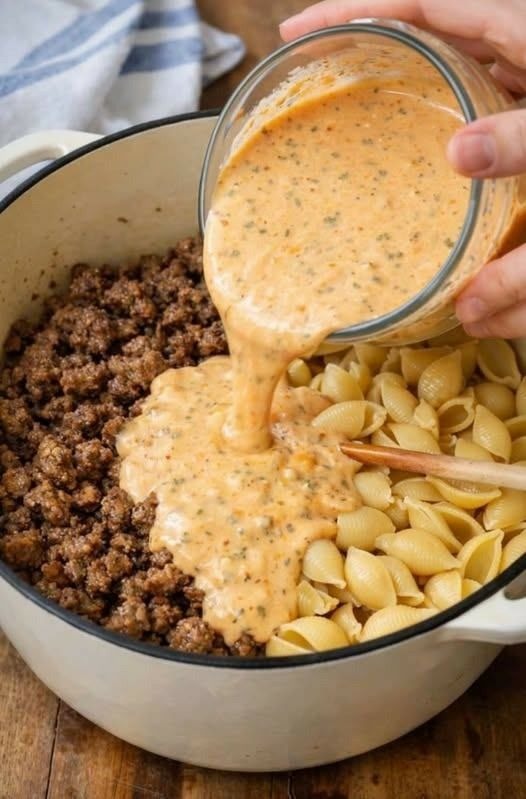
- Add the cooked, drained pasta shells and the reserved browned ground beef (along with any savory juices that accumulated in the bowl) directly into the pot with the cheese sauce.
- Using a large spatula, fold the ingredients together gently. Ensure that the meat is distributed evenly and that every single shell is generously coated inside and out with the cheese sauce.
- Let the pasta sit undisturbed for 2 to 3 minutes off the heat. This allows the shells to absorb the flavors of the sauce deeply.
Pro-Tips for Culinary Perfection
- Grate Your Own Cheese: Avoid pre-packaged shredded cheese from the grocery store. Those bags contain anti-caking agents like potato starch or cellulose, which block moisture and prevent the cheese from melting into a completely smooth sauce. Buying a block of cheddar and grating it yourself yields a night-and-day difference in texture.
- Sauce Consistency Control: Pasta acts like a sponge. If you notice your dish looks a bit too thick after sitting, simply splash in 2 to 3 tablespoons of warm milk or extra beef stock to instantly restore its glossy, creamy texture.
- Elevate the Flavors: Want a bit of contrast? Stir in a tablespoon of tomato paste along with the garlic to add an acidic depth, or throw in a pinch of crushed red pepper flakes if you enjoy a subtle, comforting kick of heat.
Storage and Reheating Guidelines
If you happen to have leftovers, this dish stores beautifully. Allow the pasta to cool down completely to room temperature before transferring it into an airtight glass container. It can be safely refrigerated for up to 4 days.
When you are ready to enjoy it again, avoid using the microwave on high heat, which can cause the oils in the cheese to separate. Instead, place your desired portion into a small saucepan over medium-low heat, add a splash of milk or water to loosen the structure, and stir gently until it is heated through completely and returns to its original, velvety state.