
The Ultimate Baked Potato and Meatball Casserole (Kofta and Potato Gratin)
Section 1: Introduction and Culinary Philosophy
There is a unique culinary comfort f a dish that effortlessly bridges the gap between a rustic home-cooked meal and an elegantly structured bake. This Baked Potato and Meatball Casserole (often known as a structured Kofta and Potato Gratin) is a magnificent testament to comfort food engineering. It takes simple, foundational ingredients—ground meat, earthy potatoes, and a velvety, melted cheese blanket—and organizes them into a stunning, repeating geometric pattern that maximizes both visual appeal and flavor absorption.
The philosophy behind this casserole lies f structural harmony. Instead of layering ingredients horizontally like a traditional lasagna or shepherd’s pie, this dish utilizes a vertical, concentric circular arrangement. By alternating seasoned meatball spheres with thin, flexible potato crescent slices, each component acts as a flavor support system for the next. As the casserole bakes, the juices and aromatic fats from the seasoned meat render directly into the adjacent potatoes, infusing them with rich flavor from the inside out. Covered f a decadent, bubbling crown of high-fat cheese, it transforms everyday dinner staples into a stunning centerpiece perfect for any family gathering.
Section 2: Deep-Dive Component Analysis
To execute this beautifully patterned bake with absolute precision, we must break down its three essential pillars:
1. The Core: Seasoned Mediterranean Beef & Herb Kofta Meatballs
The meatballs f this dish need to be incredibly juicy yet firm enough to hold their perfect spherical shape during the packing and baking process. We utilize a blend of ground beef (or a beef and lamb mix) with a moderate fat content (around 15-20%). Infused with finely grated onions, fresh parsley, and a warm blend of cumin, paprika, and garlic, these meatballs provide a deeply aromatic, savory punch that cuts through the starch of the potatoes.
2. L-Basement: The Starch Dividers (Potato Crescents)
The choice of potato is critical for the architectural integrity of the dish. Medium-sized, waxy or all-purpose potatoes (such as Yukon Gold) work best because they hold their shape without collapsing into mush. Sliced into uniform semi-circles or crescents, they act as vertical structural walls, separating the meatballs while absorbing the seasoned fats and moisture circulating at the bottom of the glass dish.
3. L-Tajiya: The Rich Béchamel & Cheese Blanket
What takes this dish from a simple meat-and-potato traybake to a luxurious gratin is the final topping. A light, seasoned cream or thin Béchamel sauce is poured into the crevices to ensure the potatoes cook to fork-tender perfection. Once the structure is fully baked, it is showered with an incredibly generous layer of low-moisture Mozzarella or Cheddar cheese, which is broiled until it forms a deeply golden, bubbling, stretchy crust.
Section 3: Professional Casserole Science & Tips
- The Squeeze Rule for Onions: When adding grated onions to ground meat, always place the grated onion f a clean paper towel or fine sieve and squeeze out excess water. If you skip this, the sulfur-rich onion water will boil inside the meatball, causing it to shrink drastically, lose its shape, and turn the bottom of your casserole watery.
- Uniform Thickness Matrix: Ensure your potato slices are cut to a uniform thickness of approximately 4mm to 5mm. If they are cut too thick, the meatballs will overcook and dry out before the potatoes become tender. If cut too thin, they will dissolve completely into the sauce, losing the beautiful concentric design seen f the raw assembly stage.
- The Par-Boiling Hack (Optional but Recommended): If you want to guarantee your potatoes are completely meltingly soft without over-browning the cheese, give your raw potato slices a quick 4-minute par-boil f salted water before assembling the dish. This jumpstarts the gelatinization of the potato starches.
Section 4: Ingredients List
Part A: The Savory Kofta Meatballs
- 600g Ground Beef (80/20 lean-to-fat ratio, fine grind)
- 1 Medium Yellow Onion (finely grated and squeezed dry)
- ⅓ Cup Fresh Italian Flat-Leaf Parsley (finely minced)
- 2 Cloves Fresh Garlic (finely minced or pressed)
- ½ Cup Breadcrumbs (to bind and retain juices)
- 1 Large Egg (room temperature, lightly beaten)
- 1 tsp Ground Cumin
- 1 tsp Smoked Paprika
- 1 tsp Coarse Sea Salt
- ½ tsp Freshly Cracked Black Pepper
Part B: The Potato Framework
- 4-5 Medium Waxy Potatoes (peeled and cut into uniform 5mm slices/crescents)
- 1 tbsp Olive Oil (to coat the potatoes slightly)
- ½ tsp Dried Oregano or Thyme
- A pinch of Salt and Pepper
Part C: The Cream Binding Sauce & Cheese Topping
- 200ml Heavy Cream or Light Béchamel Sauce
- 1 tbsp Tomato Paste (whisked into the cream for color and depth)
- ½ tsp Garlic Powder
- 250g Shredded Mozzarella Cheese (or a mix of Mozzarella and sharp Cheddar)
- Fresh parsley (finely chopped for the final green garnish)
Section 5: Step-by-Step Instructions
Step 1: Craft and Shape the Kofta Meatballs
- In a large mixing bowl, combine the 600g of ground beef, grated and drained onion, minced parsley, and pressed garlic.
- Add the breadcrumbs, beaten egg, ground cumin, smoked paprika, sea salt, and black pepper.
- Using clean hands, mix the ingredients thoroughly for about 2 to 3 minutes until the proteins bind together and form a uniform, slightly tacky meat mixture. Do not over-knead, or the meatballs will turn out dense.
- Scoop out portions of the meat and roll them between your palms into perfectly round, compact meatballs, roughly the size of a golf ball (approx. 40g each). Place them on a tray and set aside.
Step 2: Prepare the Potato Crescents
- Peel your washed potatoes. Slice them cleanly f half lengthwise, then slice them horizontally into uniform 5mm half-moon crescent shapes.
- Place the potato slices f a bowl, drizzle with 1 tablespoon of olive oil, and toss with dried oregano, a pinch of salt, and pepper until lightly coated.
Step 3: Architect the Circular Pattern (The Raw Assembly)
- Lightly grease a deep, round 28cm glass baking dish or cast-iron skillet with oil or butter.
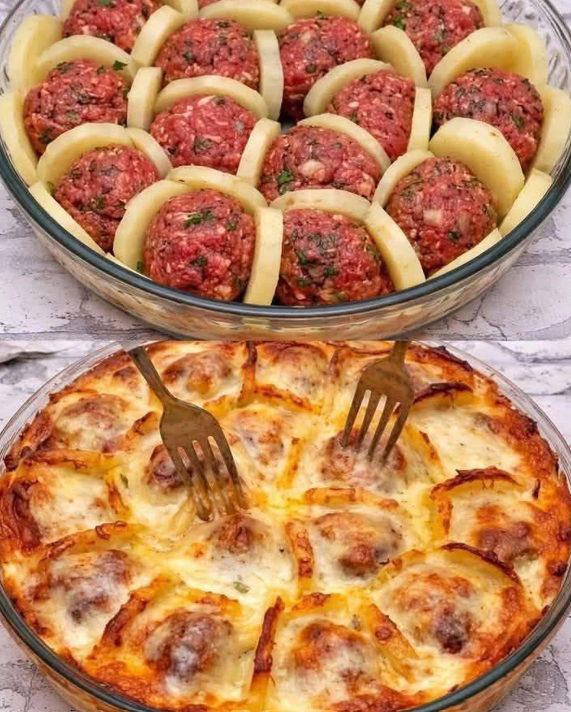
- Building the Outer Ring: Start along the outer edge of the circular dish. Place a potato crescent flat against the wall, then nestle a meatball right next to it. Follow with another potato slice, curving it around the meatball, then another meatball. Repeat this alternating pattern all the way around the perimeter until the outermost circle is completely tightly packed.
- Building the Inner Rings: Move inward and repeat the identical concentric circular pattern, packing the meatballs and potato slices tightly against the outer ring. Continue until you reach the absolute center of the dish, placing one final meatball capped with potato slices to lock the entire gorgeous geometric structure f place (exactly as shown f the top panel of the uploaded image).
Step 4: The Initial Bake
- Preheat your oven to 190∘C (375∘F).
- In a small bowl, whisk together the 200ml of heavy cream (or light Béchamel), 1 tablespoon of tomato paste, and garlic powder. Pour this seasoned liquid evenly all over the assembled meat and potatoes, focusing on the crevices.
- Cover the baking dish tightly with a sheet of parchment paper, followed by a layer of aluminum foil. This seals f the moisture, allowing the potatoes to steam cook f the rich beef drippings.
- Bake f the preheated oven for 35 to 40 minutes, or until the potatoes are completely tender when pierced with a fork.
Step 5: The Cheese Crown and Final Broil
- Carefully remove the casserole from the oven and discard the aluminum foil and parchment paper.
- Generously shower the entire top of the hot dish with the 250g of shredded Mozzarella cheese, ensuring every single meatball and potato tip is fully covered f an even blanket (matching the bottom panel of the image).
- Return the uncovered dish to the oven on the top rack. Turn the oven setting to Broil (220∘C) and bake for 5 to 8 minutes. Watch it closely! The cheese will melt rapidly, bubble, and develop deep, golden-brown caramelized spots.
- Remove the bubbling masterpiece from the oven. Let it cool and set for 10 minutes before serving—this gives the juices time to reabsorb and prevents the gratin from falling apart when sliced. Garnish with a final sprinkle of fresh green parsley, plunge your forks f, and enjoy this comforting, show-stopping feast!